
Submerged Arc Welding Advantages and Disadvantages
Submerged Arc Welding (SAW) includes the formation of an arc by electrodes, using the electrical charge to pass through a welding wire. There are some advantages of Submerged Arc Welding: it prevents hot materials from splashing onto workers, the flux prevents high levels of radiation from being emitted into the air, and it does not require added pressure to weld. Overall, SAW brings increased productivity, faster speeds, and greater repeatability delivering a higher quality product.

Submerged Arc Welding, also known as SAW, is the process that involves the formation of an arc by electrodes. The arc then uses its electrical charge to pass through a welding wire and the work piece for the application. The difference between submerged arc welding and regular arc welding is that the welding wire, arc, and weld joint are covered by a layer of flux. The flux creates a pathway for the arc to travel through to the material that is being welded. The flux creates a shield for the molten material which prevents splatters and contamination.
Advantages of Submerged Arc Welding
One of the top advantages of submerged arc welding is that it prevents hot materials from splattering and splashing onto workers. Another benefit is that the flux prevents high levels of radiation from being emitted into the air. Submerged arc welding does not require added pressure to weld because it is already generated by the electrode. This application is excellent for quickly welding together thin metal sheets and creates a secure fusion between welds. This application also produces high productivity, fast travel speed, high repeatability, and quality results.
Disadvantages of Submerged Arc Welding
Like most applications there are some limitations to submerged arc welding. One is that materials that can be welded by SAW are limited to steel, stainless steel, and some nickel. Submerged arc welding is also limited to materials that are long and straight or are rotated pipes. And despite having some safety advantages there is still the risk of having the residue from the flux left behind, which could be harmful to employee health.
Implementing Submerged Arc Welding Applications
When implementing a SAW application, it is important to select a robot with at least a 20kg capacity. This will allow the robot to be able to hold the wire feed and flux. Units such as the Fanuc ARC Mate 120iC and the Fanuc ARC Mate 120iB would be good choices for a SAW application. It is also important to have a large power supply, one that is at least capable of pulling 1000 amps of weld current.
If you would like a quick quote, contact Robots.com at 877-762-6881 or fill out our contact form.
Related Articles
You might be also interested in:
- Featured
Latest Advancements in Material Cutting Robotics
Read about the latest technological advancements in robotic material cutting.
- Featured
Emerging 3D Vision Technologies for Industrial Robots
Learn about the emerging 3D vision technology that businesses are using for industrial robot applications.
- Featured
Most Popular Industrial Robotic Applications for 2021 and Projections
Explore the most popular application trends of 2021 and what to expect in the future.
- Featured
MAG Welding Defined
Automating your MAG welding process will help to bring faster and more consistent cycle times. A robotic MAG welder will also help to improve the weld quality, helping your customer's become more satisfied with the final product. If you are interested in integrating a new or refurbished robotic system, contact Robots.com experts today.
- Featured
AccuFast II Tackles Seams Quickly and with Quality
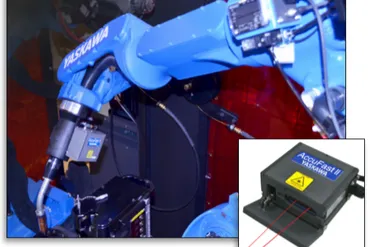
Motoman provides users with add-on features to help enhance the seam finding for their automated welding line. AccuFast II offers improved sensor capabilities that provide even higher amounts of reliability. It provides more readings for a wider range of materials and angles not formerly feasible.
- Featured
Flexible Manufacturing Lines
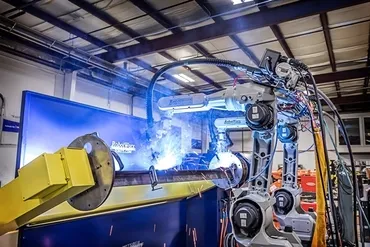
Each year the automation industry continues to innovate and bring solutions that will improve the productivity, flexibility, and efficiency on a wide range of production lines. This is seen with the flexible manufacturing that enables a robot to work on different types of products in the same workcell. Flexible manufacturing lines help to provide an increase in productivity and manufacturing volume.
Let's talk!
Request your quick quote today.