
Benefits of Robotic Deburring
A deburring robot can accomplish tasks much faster and with greater quality than a manual production line. Deburring robots help lead to a fast return on investment of the robot; they work endlessly and without the need for any breaks.

We are all born with idiosyncrasies and imperfections that make us unique…and human! But when a product has imperfections, for both safety and aesthetic reasons, these inaccuracies need to be removed. Deburring is the process of removing burrs, sharp edges, or fins off parts. Robotic deburring is when this process becomes automated.
In comparison with a human working manually to remove burrs, a robot can perform the same task much more quickly, therefore increasing production. The robot can manufacture more parts in the same amount of time, leading to a fast return on the investment of the robot. They can work endless hours without becoming fatigued like a human would, and they free up floor space that was previously taken by humans. Last, working on deburring is hazardous for a human; it’s a repetitive, noisy job where material could be sprayed into the eyes or skin. Insurance rates will be significantly decreased if deburring is automated.
Robots also improve the quality of the product, because of the precision of their work. Automatic deburring is not only faster, but also more efficient than manual deburring. Robotic deburring improves the application so that the product is created at a faster rate with a more precise finish.
Robotic vision, sensors, and fixturing allow the robot to accurately remove burrs. Humans simply don’t have the precision afforded a robot, and most likely, lack the patience for the task as well!
A robotic deburring tool is either air or electrically driven, and can be mounted to the robot wrist, or a bench or fixture. Compliance is important in these tools, and the user can select either radially-compliant tools or axially-compliant tools, depending on the nature of the project. Radially-compliant tools offer a gentle touch with compliance to make sure the part isn’t cut too far. They are ideal for edge-deburring in areas that are tough to reach, and can also remove parting lines and flash. Axially-compliant tools have both lateral and axial compliance and work with a 45 degree cutting angle, perfect for edge-deburring and chamfering.
Cost is not the issue that it once was with automatic deburring systems. They are much more affordable today than they used to be, and they are easily implemented into existing production lines. A key benefit of robotic deburring is that the robot can be used for other tasks as well. It’s extremely flexible.
For a fast, precise, efficient deburring process, robots are the clear choice. Robots.com can help you integrate a deburring robot into your production line. For more information, contact Robots.com here or call 877-762-6881.
Related Articles
You might be also interested in:
- Featured
Latest Advancements in Material Cutting Robotics
Read about the latest technological advancements in robotic material cutting.
- Featured
Emerging 3D Vision Technologies for Industrial Robots
Learn about the emerging 3D vision technology that businesses are using for industrial robot applications.
- Featured
Most Popular Industrial Robotic Applications for 2021 and Projections
Explore the most popular application trends of 2021 and what to expect in the future.
- Featured
MAG Welding Defined
Automating your MAG welding process will help to bring faster and more consistent cycle times. A robotic MAG welder will also help to improve the weld quality, helping your customer's become more satisfied with the final product. If you are interested in integrating a new or refurbished robotic system, contact Robots.com experts today.
- Featured
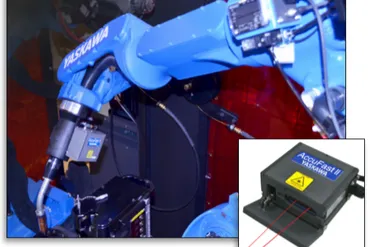
AccuFast II Tackles Seams Quickly and with Quality
Motoman provides users with add-on features to help enhance the seam finding for their automated welding line. AccuFast II offers improved sensor capabilities that provide even higher amounts of reliability. It provides more readings for a wider range of materials and angles not formerly feasible.
- Featured
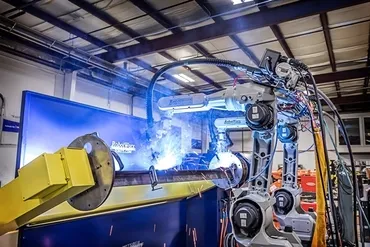
Flexible Manufacturing Lines
Each year the automation industry continues to innovate and bring solutions that will improve the productivity, flexibility, and efficiency on a wide range of production lines. This is seen with the flexible manufacturing that enables a robot to work on different types of products in the same workcell. Flexible manufacturing lines help to provide an increase in productivity and manufacturing volume.
Let's talk!
Request your quick quote today.