
Four Reasons to Choose Automated Pipe Welding with Robots
Automating your pipe welding production line will ensure an increased productivity, versatility, and overall better quality product. Robotic tube and automated pipe welding are rising in popularity and being seen on production lines across the globe. The new technologies, sensors, through-the-arc tracking, and off-line programming options are all ways to bring incredible advancements to your manufacturing line.

Robotic tube and automated pipe welding continue to grow in popularity. Take a quick look at the main reasons why:
1. New Technologies:
Welding awkwardly-shaped piping and tubing can prove very difficult, even for a robotic welder. But recent developments in robotic technologies have paved the way for sophisticated robotic pipe welding solutions. Some of the latest enhancements include:
Sensors: When equipped with various sensing systems, a pipe welding robot can actually "feel" where a weld should be. For instance, tactile and proximity sensors can work together to locate and position a torch correctly. This is an ideal system for small-batch pipe and tube welding.
Through-the-Arc Tracking: With through-the-arc tracking, the beginning and end of a weldment can be inputted and the robot will trace the path in between. This saves time and increases the weld accuracy of arc welding applications.
Off-line Programming: New off-line programming software leads to higher-quality pipe and tube welding and efficiency. Programming doesn't have to lead to additional system down time. Instead, all the unique angles, diameters, and curves can be carefully programmed through computer software. Such off-line programming also allows programmers to test out various weld setups.
2. Flexibility:
Robotic arms offer unmatched dexterity and reach. While manual pipe and tube welding often requires frequent stops and starts for re-positioning the torch, robots can realign without pausing. Hard-to-reach angles and orbital welds are also less taxing for industrial robots.
3. Weld Quality:
Robots are able to perform top quality welds with higher deposition levels and consistency, even at awkward angles. With robotic pipe and tube welding the thermal impact is reduced as well, minimizing distortion and the need for later corrections.
4. Productivity:
Simply put, robotic pipe and tube welding is more reliable. With fully automated or even hybrid robot and manual pipe welding, there are fewer mistakes and defects. This in turn saves time and materials. Automated welding robots produce consistent pipe weld quality and throughput every time.
Interested in automating your pipe or tube welding application? Call Robots.com to find out if robotic welding automation fits your needs: 877-762-6881 or contact experts online.
Related Articles
You might be also interested in:
- Featured
Latest Advancements in Material Cutting Robotics
Read about the latest technological advancements in robotic material cutting.
- Featured
Emerging 3D Vision Technologies for Industrial Robots
Learn about the emerging 3D vision technology that businesses are using for industrial robot applications.
- Featured
Most Popular Industrial Robotic Applications for 2021 and Projections
Explore the most popular application trends of 2021 and what to expect in the future.
- Featured
MAG Welding Defined
Automating your MAG welding process will help to bring faster and more consistent cycle times. A robotic MAG welder will also help to improve the weld quality, helping your customer's become more satisfied with the final product. If you are interested in integrating a new or refurbished robotic system, contact Robots.com experts today.
- Featured
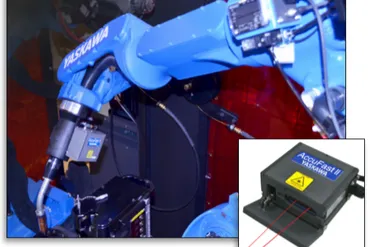
AccuFast II Tackles Seams Quickly and with Quality
Motoman provides users with add-on features to help enhance the seam finding for their automated welding line. AccuFast II offers improved sensor capabilities that provide even higher amounts of reliability. It provides more readings for a wider range of materials and angles not formerly feasible.
- Featured
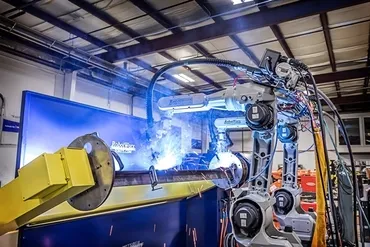
Flexible Manufacturing Lines
Each year the automation industry continues to innovate and bring solutions that will improve the productivity, flexibility, and efficiency on a wide range of production lines. This is seen with the flexible manufacturing that enables a robot to work on different types of products in the same workcell. Flexible manufacturing lines help to provide an increase in productivity and manufacturing volume.
Let's talk!
Request your quick quote today.