
Plasma Arc Welding Advantages and Limitations
Industrial robots are able to do a variety of welding tasks including plasma arc welding. Plasma arc welding is an extension of gas metal tungsten welding that produces an amazing amount of control and quality product.
Similar to TIG welding processes, plasma arc welding (PAW) provides a high quality method to joining metal parts.
Principles of PAW
Plasma arc welding is basically an extension of gas metal tungsten welding (GMAW or TIG). Both welding processes generally use nonconsumable tungsten electrodes to carry power to the welding torch and into the orifice gas. The orifice gas represents much of what is different about the GMAW welding process and the PAW welding process. The design of a PAW torch allows for the orifice gas to build up in a chamber at the end of the torch. The arc heats up the orifice gas to nearly 30,000 degrees Fahrenheit. At this point, the orifice gas turns to plasma and is expelled through a narrow opening at the end of the welding torch. As in GMAW, a shielding gas surround the weld pool to create an inert environment to keep the weld pool clean and free from oxygen that will rust the metal.
Advantages and Limitations
The main advantage of plasma welding lies in the control and quality produced in the part being welded. The torch design allows for better control of the arc, as well as a higher tolerance for in torch standoff distance.
Welds are typically cleaner and smoother when using the PAW process. Smaller heat-affected zones result in welds that are very strong and less noticeable, which is important for some parts.
A major limitation in implementing a plasma welding process is the relatively high startup costs. Plasma welding equipment tends to be expensive. Because it is a more specialized welding process, the training and expertise required is also more intense.
PAW and Industrial Robots
Robots.com offers a variety of plasma welding robots from various top brands. Any of these manufacturers’ arc welding robot arms can handle a plasma arc welding dressout package. Fanuc’s ARC Mate 120i and Motoman’s EA1400 robot arms are examples of these robots.
To learn more about automating your plasma welding tasks with an industrial robot, contact experts online at 877−762−6881.
Related Articles
You might be also interested in:
- Featured
Latest Advancements in Material Cutting Robotics
Read about the latest technological advancements in robotic material cutting.
- Featured
Emerging 3D Vision Technologies for Industrial Robots
Learn about the emerging 3D vision technology that businesses are using for industrial robot applications.
- Featured
Most Popular Industrial Robotic Applications for 2021 and Projections
Explore the most popular application trends of 2021 and what to expect in the future.
- Featured
MAG Welding Defined
Automating your MAG welding process will help to bring faster and more consistent cycle times. A robotic MAG welder will also help to improve the weld quality, helping your customer's become more satisfied with the final product. If you are interested in integrating a new or refurbished robotic system, contact Robots.com experts today.
- Featured
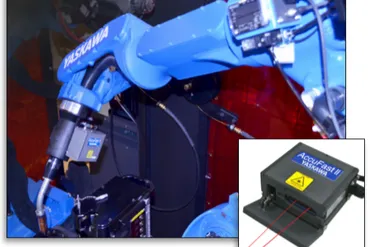
AccuFast II Tackles Seams Quickly and with Quality
Motoman provides users with add-on features to help enhance the seam finding for their automated welding line. AccuFast II offers improved sensor capabilities that provide even higher amounts of reliability. It provides more readings for a wider range of materials and angles not formerly feasible.
- Featured
Flexible Manufacturing Lines
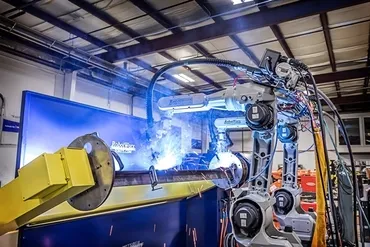
Each year the automation industry continues to innovate and bring solutions that will improve the productivity, flexibility, and efficiency on a wide range of production lines. This is seen with the flexible manufacturing that enables a robot to work on different types of products in the same workcell. Flexible manufacturing lines help to provide an increase in productivity and manufacturing volume.
Let's talk!
Request your quick quote today.