
Programmable Logic Controllers (PLC)
The computer behind the robots performance is the Programmable Logic Controllers (PLCs). PLCS are able to control the robots and help them do their job at very specific times and points in the production process. PLCs help robots accomplish a quality product and keep the production line going.

Programmable Logic Controllers (PLCs) are central computers that control where and when industrial robots perform their duties. Like a director controlling a symphony of musicians, a PLC controls a “symphony” of specialized robots. These robots all do their jobs at the direction and timing of the PLC to work towards a common goal, product, or completed process.
The first PLCs were introduced in the late 1960s and were massive, delicate, and complex. They had to be carefully climate controlled and shielded from the heat, noise, and vibration of a manufacturing environment. They were very difficult to program. Then, as computers went through a microprocessor revolution, so did PLCs. Today’s PLCs are powerful, resilient machines designed specifically to operate in a harsh factory environment. They have enormously flexible input/output (I/O) capacity and feature user-friendly man-machine-interfaces (MMI) or graphical user interfaces (GUI). Modern PLCs are also designed with backup power supplies and exceptionally stable software operating systems to assure uninterrupted control of all their processes.
The benefits of a PLC are significant. PLCs specialize in managing complex, simultaneous, multi-stage operations. For example, a PLC can manage multiple assembly lines all funneling parts to packaging and palletizing robots which must package the right parts in the correct order at a precise time to be shipped out on a specific schedule. Then, inefficiencies or errors can be detected by the PLC and reported to the user, who can reprogram specific parts or the entire process through a user-friendly interface.
Many businesses also employ “safety PLCs” that remain in standby until a non-standard event happens, such as an emergency stop of an assembly line. A safety PLC would then step in to control the positions, timing, and direction of movement of the robots to assure they or any products being worked on are not damaged.
Increasing numbers of modern industrial robots, like the ones from KUKA, Fanuc, and Motoman Robotics, have PLC software and features built directly into the robot controller. This built-in software has advanced to the point where small groups of robots can act without a separate, dedicated PLC. For small-scale or simple operations, this is often a more cost-effective option than purchasing a separate PLC. This type of customer could use Motoman Robotics’s user-interface, Moto HMITM. It features a single-station solution and user-friendly touch-screen graphic interface to quickly and intuitively modify the PLC functions of multiple modern robots without having to purchase another dedicated PLC. For customers who need to manage complex operations with large numbers of similar units, such as auto manufacturing, investing in a PLC could be a smart choice, where the cost of purchasing and programming the PLC can be spread over many units of product.
Robots.com is expertly trained to help answer the question of whether a separate, dedicated PLC is right for your business. Once that decision is made, we can help equip you with the best quality PLC or industrial robot that will efficiently serve your needs.
For more information, contact Robots.com online or at 877-762-6881.
Related Articles
You might be also interested in:
- Featured
Latest Advancements in Material Cutting Robotics
Read about the latest technological advancements in robotic material cutting.
- Featured
Emerging 3D Vision Technologies for Industrial Robots
Learn about the emerging 3D vision technology that businesses are using for industrial robot applications.
- Featured
Most Popular Industrial Robotic Applications for 2021 and Projections
Explore the most popular application trends of 2021 and what to expect in the future.
- Featured
MAG Welding Defined
Automating your MAG welding process will help to bring faster and more consistent cycle times. A robotic MAG welder will also help to improve the weld quality, helping your customer's become more satisfied with the final product. If you are interested in integrating a new or refurbished robotic system, contact Robots.com experts today.
- Featured
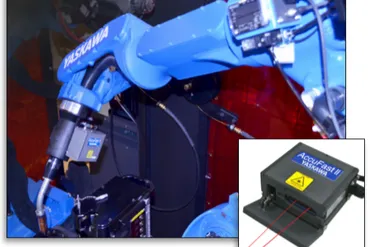
AccuFast II Tackles Seams Quickly and with Quality
Motoman provides users with add-on features to help enhance the seam finding for their automated welding line. AccuFast II offers improved sensor capabilities that provide even higher amounts of reliability. It provides more readings for a wider range of materials and angles not formerly feasible.
- Featured
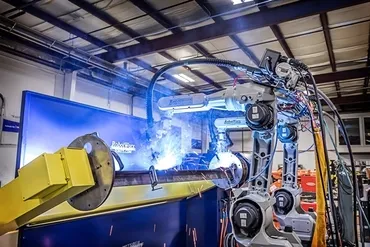
Flexible Manufacturing Lines
Each year the automation industry continues to innovate and bring solutions that will improve the productivity, flexibility, and efficiency on a wide range of production lines. This is seen with the flexible manufacturing that enables a robot to work on different types of products in the same workcell. Flexible manufacturing lines help to provide an increase in productivity and manufacturing volume.
Let's talk!
Request your quick quote today.