
Robotics Automation and Aerospace Manufacturing
Integrating a robotic system onto an aerospace manufacturing line is becoming more common as technology continues to advance. Aerospace manufacturers like the increased accuracy and decreased waste. The 6-axis robots are more affordable than a custom-built machine and perform just as efficiently.
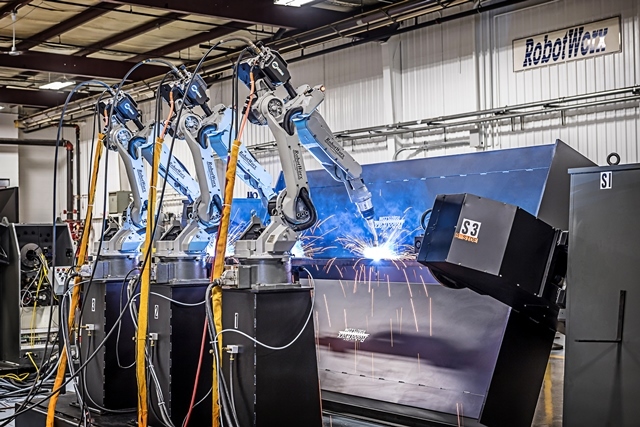
All U.S. Stealth aircraft receive a coat of specialized paint so they remain invisible to enemy radar. The paint must be applied impeccably without a bubble or drip. That's why this job is handled by the best of the best - a Motoman P8 industrial robot.
Aerospace manufacturing is unique and specialized. The parts are complex and often gigantic. While it may come as a surprise, this industry has begun to rely more and more on the standard 6-axis industrial robot, not specialized machinery. Here's are some of the top reasons why...
Robotics Automation is Economical:
Aerospace manufacturers are attracted to robots' cost-effectiveness. The typical 6-axis articulated robot is far more affordable than a custom-built machine and performs just as effectively. Companies that opt for a reconditioned robot can expect to save even more - up to 50%-60% less than the cost of a new robot.
Usability and Robotics Automation:
Compared to setting up customized machines, robotics automation is easy to deploy. Six-axis robots are quick to set up, program, and put into production.
Flexible Automation with 6-Axis Robots:
Robots are well-suited for aerospace manufacturing because they offer application and work envelope flexibility.
Quick Fix: Change the tooling, change the programming, and your 6-axis robot is ready for a new application. This flexibility (switching from arc welding to material handling, to deburring, for instance) makes robotics automation very attractive to aerospace manufacturers.
Extra Axes: The traditional 6-axis robot can also be augmented by adding additional, external axes so it can "reach" the entire length of larger parts.
Limited Quantities: Aerospace part production is different than automotive part production. Not only are parts more complicated, requiring more precision and slowed manufacturing, but aerospace parts are created in smaller batches. Industrial robots are well-suited because of their versatility.
Robotics Automation and the Aerospace Worker:
Sometimes building an aerospace craft gets a bit cramped. Industrial robots make cramped and painstaking tasks like closing up wing spaces much more ergonomic and quick.
Without the assistance of industrial robots, the aerospace worker, like the automotive worker, must endure repetitive welding, deburring, and other tasks. Now aerospace manufacturers are avoid such repetitive movement injury and strain by letting robotics automation handle the dull work.
Interested in an industrial robot for your aerospace application? Contact Robots.com online or at 877-762-6881 for pricing and information.
Related Articles
You might be also interested in:
- Featured
Latest Advancements in Material Cutting Robotics
Read about the latest technological advancements in robotic material cutting.
- Featured
Emerging 3D Vision Technologies for Industrial Robots
Learn about the emerging 3D vision technology that businesses are using for industrial robot applications.
- Featured
Most Popular Industrial Robotic Applications for 2021 and Projections
Explore the most popular application trends of 2021 and what to expect in the future.
- Featured
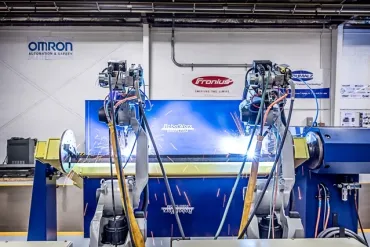
MAG Welding Defined
Automating your MAG welding process will help to bring faster and more consistent cycle times. A robotic MAG welder will also help to improve the weld quality, helping your customer's become more satisfied with the final product. If you are interested in integrating a new or refurbished robotic system, contact Robots.com experts today.
- Featured
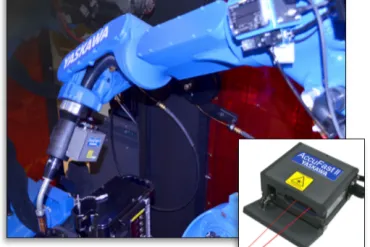
AccuFast II Tackles Seams Quickly and with Quality
Motoman provides users with add-on features to help enhance the seam finding for their automated welding line. AccuFast II offers improved sensor capabilities that provide even higher amounts of reliability. It provides more readings for a wider range of materials and angles not formerly feasible.
- Featured
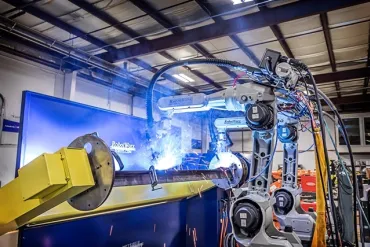
Flexible Manufacturing Lines
Each year the automation industry continues to innovate and bring solutions that will improve the productivity, flexibility, and efficiency on a wide range of production lines. This is seen with the flexible manufacturing that enables a robot to work on different types of products in the same workcell. Flexible manufacturing lines help to provide an increase in productivity and manufacturing volume.
Let's talk!
Request your quick quote today.