
Selecting End of Arm Tooling
End of Arm Tooling is also called an end effector. This part of the robot can be customized for the specific application's needs in order to boost productivity and efficiency.

EOA Tooling, also known as the end effector, is the robot tool center in which the part at the end of a robotic arm interacts with the environment. End of arm tooling devices vary by applications and are an essential component of a robot. Selecting EOA parts can be one of the most difficult aspects of automation but can be made easier when understanding your end-users needs.
Power Sources
The first step in choosing EOA parts is to select a power source. EOATs may run either electrically, hydraulically, or pneumatically.
Pneumatic power sources are popular among the packaging industry because of their weight to power ratio. They are readily available and are capable of applying powerful forces at great speeds. They are most effecitve for generating force and motion simultaneously. Pneumatic sources do have some draw backs as they can lack control and flexibility.
Hydraulic EOAT power sources produce strong clamping forces and act quickly. However this power source is expensive due to the large compressors needed to run the fluid in it.
Electronic power sources are popular for applications requiring moderate force at a high speed. It is also the cleanest power source making it ideal for handling dust sensitive products and offers a greater range of control.
Available Power Supplies at Robots.com
End of Arm Tooling Types
After selecting a power source the next step is to decide what device will be the best end effector for your application. Some popular options include:
Adaptive Grippers- These work well with packaging and handling consumer goods because they can automatically adjust according to product type. They are also ideal for handling parts with holes that cannot easily be manipulated by vacuum grippers.
Parallel EOATs- These are perfect for welding applications involving well defined objects, such as boxes.
Vacuum EOATs- These are the most popular and most cost effective form of EOA tooling as they can handle most parts and surfaces. They are ideal for handling products that require a light touch. Vacuum grips are much strong than they appear while offering flexibility as air pressure may be adjusted to reach your desired force.
Check out these end of arm tooling options available at Robots.com.
For additional information on end of arm tooling or a quick quote, please contact Robots.com online or at 877-762-6881.
Related Articles
You might be also interested in:
- Featured
Latest Advancements in Material Cutting Robotics
Read about the latest technological advancements in robotic material cutting.
- Featured
Emerging 3D Vision Technologies for Industrial Robots
Learn about the emerging 3D vision technology that businesses are using for industrial robot applications.

- Featured
Most Popular Industrial Robotic Applications for 2021 and Projections
Explore the most popular application trends of 2021 and what to expect in the future.
- Featured
MAG Welding Defined
Automating your MAG welding process will help to bring faster and more consistent cycle times. A robotic MAG welder will also help to improve the weld quality, helping your customer's become more satisfied with the final product. If you are interested in integrating a new or refurbished robotic system, contact Robots.com experts today.
- Featured
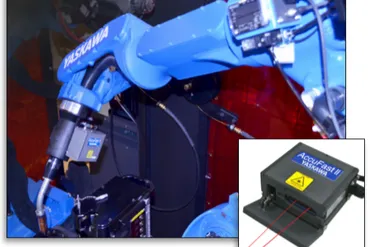
AccuFast II Tackles Seams Quickly and with Quality
Motoman provides users with add-on features to help enhance the seam finding for their automated welding line. AccuFast II offers improved sensor capabilities that provide even higher amounts of reliability. It provides more readings for a wider range of materials and angles not formerly feasible.
- Featured
Flexible Manufacturing Lines
Each year the automation industry continues to innovate and bring solutions that will improve the productivity, flexibility, and efficiency on a wide range of production lines. This is seen with the flexible manufacturing that enables a robot to work on different types of products in the same workcell. Flexible manufacturing lines help to provide an increase in productivity and manufacturing volume.
Let's talk!
Request your quick quote today.