
Squeaky cleanroom robots
Cleanroom robots are used in labs and the electronics fields. As the parts get smaller, the cleanroom robots are able to use their gentle gripper and pick up with extreme precision and gentle care. The cleanroom robots also run clean, there are dust-free robotic parts, belts, etc that do not emit a lot of dust. There are a lot of hoops that a robot has to jump through before it can be classified as a clea

There are a lot of hoops that a robot has to jump through before it can be classified as a cleanroom robot. These robots have to be able to run in a “clean” manner, as well as not kick up any static electricity that could negatively affect the product being manufactured.
Cleanroom robots are used in labs, but they are also becoming common in the electronics field. As technology gets smaller and smaller, so do the parts. And as these parts become more delicate, it makes more sense for manufacturers to switch to the gentle gripper of a cleanroom robot, as opposed to the hand of a manual application.
But, what does it take to be a cleanroom robot in the electronics industry? Well, the first thing is that you have to run clean. For a cleanroom robotic system to run clean, it first has to be designed with dust-free robotic parts, belts, etc. that do not emit a lot of dust and other particles during operation. And it must have internal vacuums that whisk away all the particles that are still emitted by the machine.
When manufacturing these sensitive microelectronics, manufacturers cannot be too careful. Even the coating on the cleanroom robot has to be specialized to not attract contaminants. Any contamination of the product could cost the company money and downtime as production shuts down to investigate the contamination source.
Another issue that cleanroom robotic systems must face is the possibility of electrostatic discharge. The robots must be specially sealed and grounded to prevent the buildup of static electricity during operation. The robots also have to be made with special materials that are nonconductive to an electrostatic charge. These charges can ruin computer parts, cellphone parts and other electronics.
If your company is in the market to update your cleanroom with the latest in cleanroom robotic innovations, you should consider Robots.com. Our company provides solutions from Fanuc, Motoman, ABB, Universal Robots, and KUKA cleanroom robotics. The staff at Robots.com will help customers design the perfect system specialized for their cleanroom specifications.
For more information on automating your cleanroom processes with Robots.com, contact us today at 877-762-6881.
Related Articles
You might be also interested in:
- Featured
Latest Advancements in Material Cutting Robotics
Read about the latest technological advancements in robotic material cutting.
- Featured
Emerging 3D Vision Technologies for Industrial Robots
Learn about the emerging 3D vision technology that businesses are using for industrial robot applications.
- Featured
Most Popular Industrial Robotic Applications for 2021 and Projections
Explore the most popular application trends of 2021 and what to expect in the future.
- Featured
MAG Welding Defined
Automating your MAG welding process will help to bring faster and more consistent cycle times. A robotic MAG welder will also help to improve the weld quality, helping your customer's become more satisfied with the final product. If you are interested in integrating a new or refurbished robotic system, contact Robots.com experts today.
- Featured
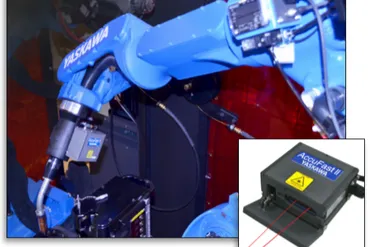
AccuFast II Tackles Seams Quickly and with Quality
Motoman provides users with add-on features to help enhance the seam finding for their automated welding line. AccuFast II offers improved sensor capabilities that provide even higher amounts of reliability. It provides more readings for a wider range of materials and angles not formerly feasible.
- Featured
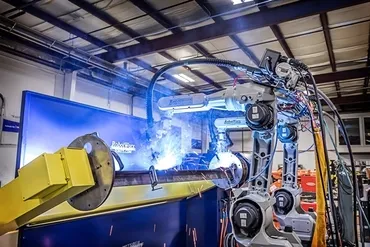
Flexible Manufacturing Lines
Each year the automation industry continues to innovate and bring solutions that will improve the productivity, flexibility, and efficiency on a wide range of production lines. This is seen with the flexible manufacturing that enables a robot to work on different types of products in the same workcell. Flexible manufacturing lines help to provide an increase in productivity and manufacturing volume.
Let's talk!
Request your quick quote today.