
The basics of shielded metal arc welding
Shielded metal arc welding is one of the many welding applications on the market today. Depending on your specific needs, the shielded metal arc welding uses a consumable electrode coated with flux. Once the weld is produced, the flux disintegrates and produces a vapor as a shielding.

There are several welding applications on the market today that perform different functions for manufacturers. The type of welding application used is usually decided by the type of material being welded and the type of weld needed for the part. Shielded Metal Arc Welding, also known as stick welding, is one of the more common welding applications available in the industry today.
SMAW is a process that uses a consumable electrode that is coated with flux when welding. This process can use alternating current or direct current power supply to complete the stick welding process. Once the weld is made, the flux disintegrates and gives off a vapor that serves as a shielding gas against contaminants.
This type of welding is fairly simplistic and versatile. As one of the world’s most popular welding processes, it offers easy maintenance and upkeep, as well as the ability to be used in several different industries, including steel construction and industrial fabrication.
A shielded metal arc welder usually welds metals like iron or steel, including stainless steel. However, this application can also handle aluminum, nickel and copper alloys if necessary, giving it a great amount of flexibility in the manufacturing facility.
Robots.com provide robots from Fanuc, Motoman, ABB, and KUKA robotics, has several shielded metal arc welding robots available for purchase and customization in our Marion, Ohio facility. Robots.com’ highly-trained staff can help you find the system you need. Our staff will work with you to design and build the right SMAW system for your facility to your exact specifications.
For more information on automating your SMAW processes with Robots.com, contact us online or at 877-762-6881.
Related Articles
You might be also interested in:
- Featured
Latest Advancements in Material Cutting Robotics
Read about the latest technological advancements in robotic material cutting.
- Featured
Emerging 3D Vision Technologies for Industrial Robots
Learn about the emerging 3D vision technology that businesses are using for industrial robot applications.
- Featured
Most Popular Industrial Robotic Applications for 2021 and Projections
Explore the most popular application trends of 2021 and what to expect in the future.
- Featured
MAG Welding Defined
Automating your MAG welding process will help to bring faster and more consistent cycle times. A robotic MAG welder will also help to improve the weld quality, helping your customer's become more satisfied with the final product. If you are interested in integrating a new or refurbished robotic system, contact Robots.com experts today.
- Featured
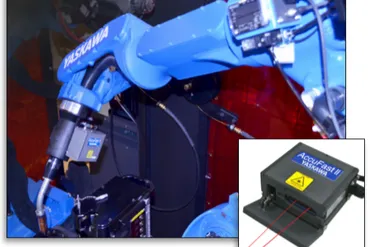
AccuFast II Tackles Seams Quickly and with Quality
Motoman provides users with add-on features to help enhance the seam finding for their automated welding line. AccuFast II offers improved sensor capabilities that provide even higher amounts of reliability. It provides more readings for a wider range of materials and angles not formerly feasible.
- Featured
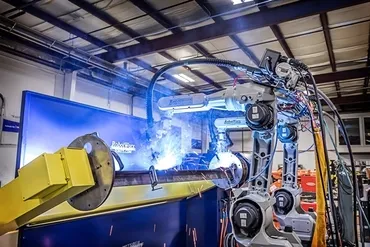
Flexible Manufacturing Lines
Each year the automation industry continues to innovate and bring solutions that will improve the productivity, flexibility, and efficiency on a wide range of production lines. This is seen with the flexible manufacturing that enables a robot to work on different types of products in the same workcell. Flexible manufacturing lines help to provide an increase in productivity and manufacturing volume.
Let's talk!
Request your quick quote today.